
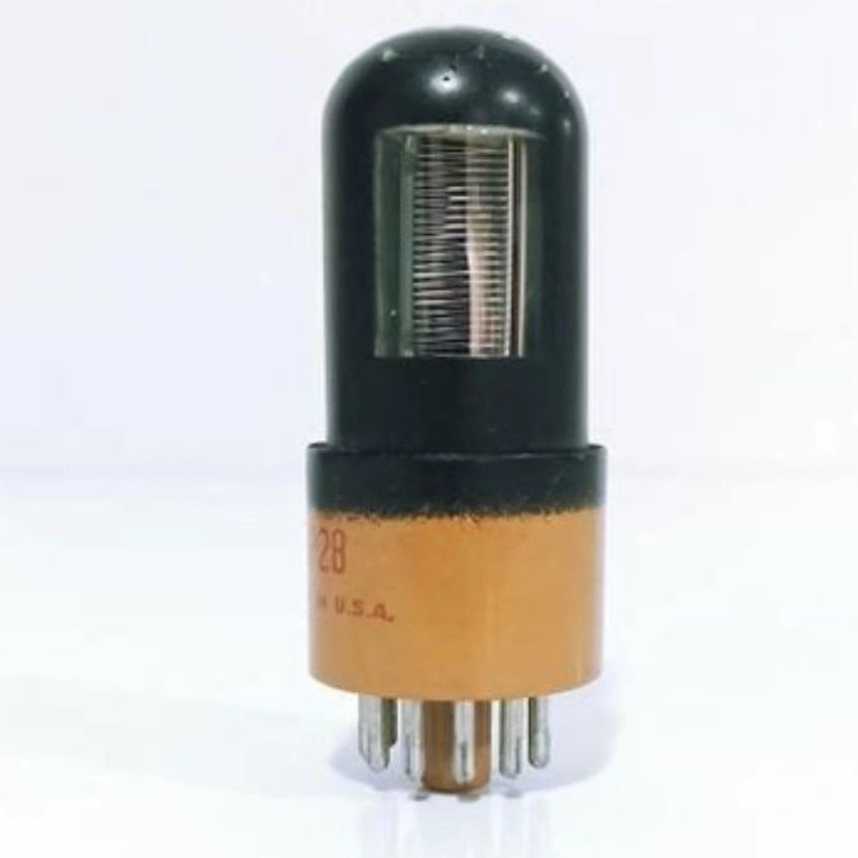

Introducing the IP28 Photo -Pillar lamp
IP28 Photo -Machine Pillar Lamp (or 1P28) is one of the most commonly used tubes in optical systems designed to enhance poor optical signals. This tube is especially used in spectroscopy, poor light detection and research experiments.
Model IP28 Technical Specifications
• Design: 2mm diameter tube and "side-on" design that enters the side.
• spectral interval: The ability to respond to light from 1 to 2 nm.
• Photocate: SB-CS with a dimension of 1.5mm.
• Number of Divine Steps: 1 Step to Enhance Signal.
• Working voltage: Voltage of 2V and voltage between ninth and 2V and anode.
• anode flow: Maximum 1.5 mAh.
• Dark flow: In standard conditions, the dark flow is about 2 nano -nano -nano.
Benefits and Restrictions
Benefits:
• Widespread response: The ability to detect light in the UV -to -the -art area.
• High amplification: The ability to reinforce the signal up to 1.5x.
• Tested Design: Widespread use in optical and laboratory systems.
Restrictions:
• Dark flow: The presence of base flow that can impair weak signals.
• Magnetic Sensitivity: Need to protect against external magnetic fields.
• Need for precise design: The need to accurately adjust the voltage and use the right circuits for optimal performance.
common applications of the IP28 model
• spectroscopy: spectral analysis in UV and visible areas.
• Weak light detection: Measurement of low -intensity optical signals.
• Research experiments: Use in scientific and research projects that need to enhance optical signal.